Purple clouds in a dark sky

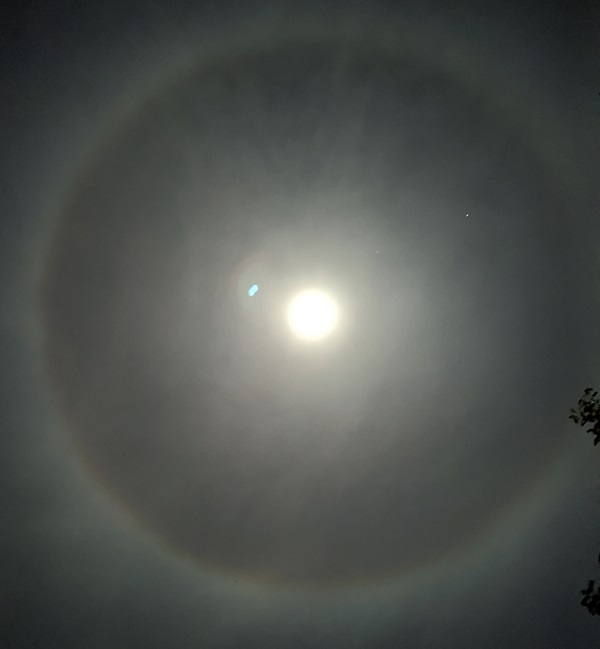
I have been fascinated by the moon lately. It is winter here in Australia, and the beginning of the eclipse season, which I haven’t paid much attention to in the past. There have been some chilly, but beautiful clear nights over the past few weeks but I have gotten into a habit before I go to bed each night, of stepping outside in my dressing gown and Ugg boots to look up to the sky. For a few nights the other week I could see a full moon, glowing in all its splendour through a fine mist of clouds. And one night the moon was setting off a luminescent ring which surrounded it, which I had never seen before. It was majestic. Other nights it is just purple clouds in a dark sky.

As I have shared in previous posts, working from home has allowed me to focus on what I would rather be doing with my day; spending time with my husband and dog, exercising, getting things done around the house and writing. There is nothing better than letting the creativity flow, following my fingers with my eyes as they dance around the keyboard, out of inspiration not out of necessity.

I also feel that being at home more has allowed me to be more in tune with the news and what’s going on around me. Sure, it was easy enough to have a quick glance at the morning news and scroll through my Twitter feed, but having time to actually focus has made me realised what a big part of my life the news has been lately; and how easy it is to get caught up in it.

Along with headlines revealing alarming Coronavirus facts and figures on a global scale, and news of riots and protests and upheaval, earlier this month there was some particularly good news in Victoria, Australia. An autistic teenager who had been missing for over two nights in bushland was found. It was so good to hear that he was finally safe and would be returning home. I also thought about the family and everyone involved in the rescue and how thankful everyone was to hear a good news story, especially when there is so much craziness in communities everywhere right now. It also drew some much-needed attention to autism and life on the spectrum. Would William ever share the full story about what happened on those cold nights? This rescue mission has shown us that anything is possible.

In other news, it has been revealed that probiotics may be able to save the Great Barrier Reef. This headline sparked my attention, as the reef is such an incredible ecosystem which as we know, after years of bleaching is being heavily damaged. Apparently, probiotics like those found in yoghurt will be used to restore the reef and help the coral survive when it is prone to stress if the current trial is successful. We can only hope for a breakthrough like this to repair the years of damage brought on by us humans.

One statement I heard the other day has stuck with me… we exist to coexist… an interesting truth in the face of a pandemic. Especially when coexisting is the problem.

Like animals, we humans are linked to a day-night cycle and although our routines may have been majorly disrupted in recent months, we have been forced to adapt and develop new habits.

Right now, I am preparing myself to step outside to look at the moon before I go to bed, when I will allow my mind to refocus and prepare for a new day as my dog and I wonder what tomorrow will bring.
Sunsets and reflection

I am one of those people who is enjoying this time in isolation, particularly with regards to working from home. I get to spend more time with my husband and my dog and as soon as I log off each weekday, I am free to go for a run or do whatever I need to do. I don’t have a 40 minute commute ahead of me, crammed in with a bunch of strangers in the same situation, followed by an hour at the gym, again with sweaty individuals who don’t understand the meaning of personal space, only to get home by 7:30pm, walk the dog and then sit down to enjoy dinner by 8:30 or 9pm.

In saying that, I didn’t used to mind the morning commute. I would often get a seat on the train so had time to sit somewhat comfortably and read the day’s news. I did not mind overhearing conversations that weren’t relevant to me or smiling awkwardly at whoever squeezed aside to let me off the train. We were all in the same situation, on our way to the office, where we would spend the day trapped in a same space with many others who we may or may not be able to tolerate, sometimes able to get outside for a walk around the block at lunchtime, depending on our schedules or the weather.

I thought my day to day was pretty good and I had a routine figured out that worked for me most of the time. I never had any trouble getting out of bed in the morning and was able to challenge myself with new projects at work.

But now, having worked from home for close to three months straight, I am loving my new routine. It is a difficult situation that the world is in, but if we begin to consider the positive impact this could have on workplace flexibility and adaptability (as well as the environmental benefits) when we come out of it, we realise that for many of us working from home on a full time basis is not a bad idea at all. If we can thrive in a familiar environment, why take that away? Why force us into a potentially unhealthy routine, where we are much more likely to suffer fatigue, exhaustion or contract a highly contagious virus?

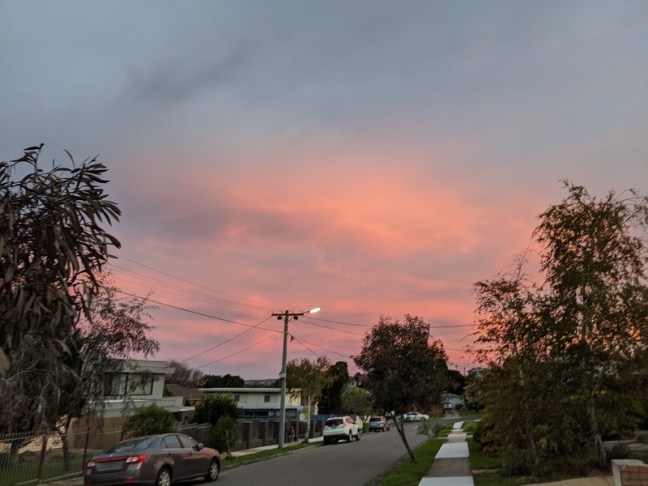
On an evening run last week, I took the time to appreciate where I was and what I noticed around me. The sky was a deep pink colour; it was a gorgeous sunset and I couldn’t help but think ‘red sky at night, sailors delight,’ thinking of the fisher people who may be out on the water the next day and that if the riddle were true, a clear morning would follow. I stopped to take photos which is not something I often do while on a run, but the way that the glow of the sky was soaking into everything that lay beneath it, I couldn’t resist. I had been using a tracker app and surely stopping would not do me any favours in getting a good time, but I was caught up in the moment ‒ something which has not happened at least since the start of lockdown.

It was a good feeling, being so involved in what is going on around me, to not be thinking about anything else, other than how I felt at that time.

This is a dividing time for workforce flexibility, where these new opportunities and emotions are making many of us reconsider our ‘old lives’. Rather than contemplating an eventual return to the office, what organisations should be getting their heads around is the idea of working from home as a continued future practice. If we have adapted well in the current situation, and are better off this way, why should that be taken away?

If you have any thoughts on this topic, please leave a comment below.

Preserving our environment

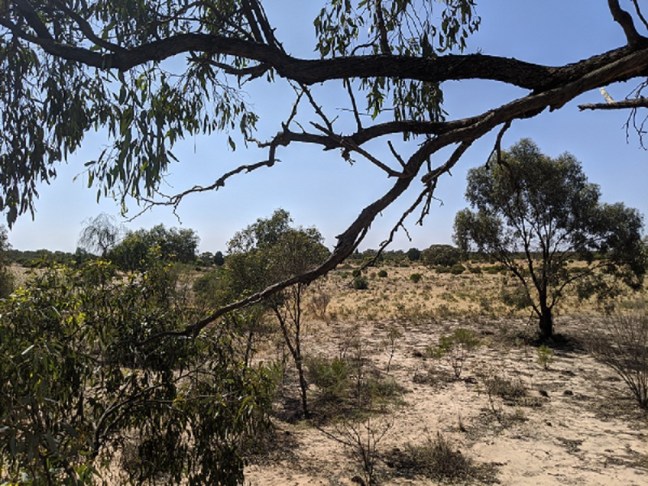
A couple of months ago I went to visit my dad who lives in the bush. By bush I mean total bush – thousands of hectares of it.

My dad and his wife spend a lot of time and effort working on ways to conserve their land. They don’t farm livestock (do chickens count?) and have a pet dog who loves the land as much as they do. Over the weekend we went for many walks around their property, which I had done so many times before, but never really absorbed the information. This time I consciously learnt about the many different things there were to appreciate.

Time to explore

On a walk with my sister, we got to a gate marked ‘Ogyris Gate’. I asked her what it meant, and she told me it as a species of rare butterfly, native to Australia and sighted on their land. I never saw one that weekend but was curious, so I looked into it some more when I returned home and I learned that the Ogyris genoviva is a large purple/blue coloured butterfly, found primarily in east and southeast Australia. Its wingspan is 50mm, and it is most often found in Eucalypt woodland.

Offsetting carbon with native flora

They have planted so many trees over the years – and due to drought, not a lot of them have survived. These are the challenges of living on a property like that, changing weather is inevitable. There is a patch of young eucalyptus trees not far away from their house, covering maybe 30 square metres. The trees are thriving, as they have been planted in a patch of irrigation. They are 30 years old – as old as me, and they still look so young and green, not your average climbing tree that’s for sure.

In their ‘front yard’ (an area of grass at least 2km squared), dad told me proudly that there were 11 different species of native grass. Most evenings, dad would walk around the ‘yard’ and pick out prickle patches, cussing the nasty weeds. I had brought only my casual runners for the weekend, and after every walk, I spent time removing the prickles that had embedded themselves into the soles.

A new perspective

I really enjoy staying at Dad’s place. The feeling of being with nature and (almost) living off the land makes me feel somewhat relaxed. Learning about plants such as Old Man Saltbush and taking time to watch the resident eagle through a telescope is not something that happens often for me back in Melbourne.

It has been a challenging start to 2020, first Australia was affected by the ravaging bushfires (while fires had only recently been extinguished in other areas of the world) and now COVID-19. Some good news is that with the majority of people working from home and travel being restricted, carbon emissions have reduced, and nature is slowly changing. While it has taken a global pandemic for this to happen, it will certainly be interesting to see what we learn from all of this; and how our perspective of the issue may change for the better.

Enjoying all the region has to offer: Hobart, Tasmania

At this very moment, times are incredibly difficult for the travel industry and the rest of the world. By publishing this post I’m not encouraging people to travel right now, and expose themselves and others to COVID-19, but reminding people that we live in an incredible world, and there is a lot to look forward to when the end is in sight. Let me tell you a bit about my trip to Hobart earlier this year.

In January 2020, we went on a quick 3-night trip to Hobart, Tasmania. We are so lucky to have this idyllic city not too far away – only a short flight or boat ride over the Bass Strait from Melbourne.

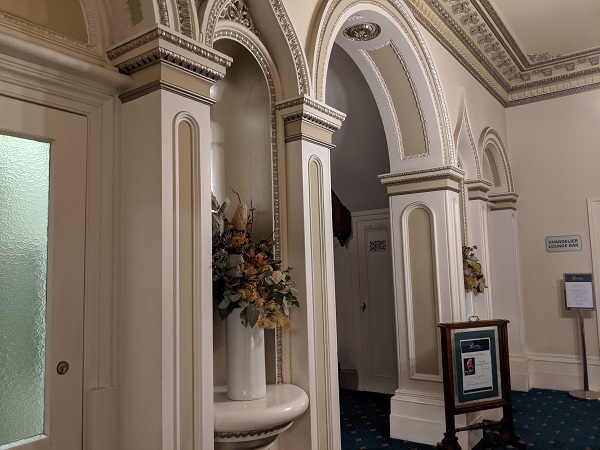
We arrived late at night and had to collect our apartment key from a building on top of a hill in Salamanca, “Lenna”. It was a beautiful old mansion, with ornate features and despite being ready for bed, I stopped to take in its charm.

Lenna
Lenna, Hobart

In the morning we went to Salamanca market, which was bustling. I had never been before but had heard good things, and I was not let down. There were so many stalls selling stunning local produce and handmade items. We purchased some peanut butter, a set of wooden coasters for our table at home, enjoyed some fresh berries, perused some luxurious leather goods and sampled some whiskey from a distillery that we planned to visit the next day.

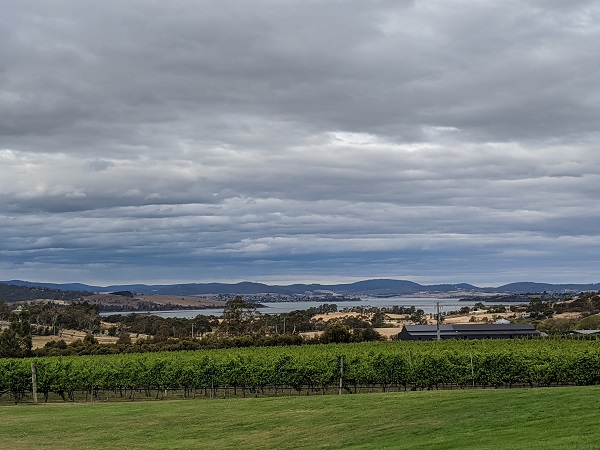
We had a wedding later in the day, and the ceremony was only a short walk away at Battery Point. However, due to spending a little too long enjoying the harbour at lunchtime, we were running late, so we caught an Uber. The reception was at Frogmore Creek Winery, which was a gorgeous location. Nestled among the vineyards, we enjoyed the remaining light filled hours outside, before heading in to begin the celebrations.

Frogmore Creek
Frogmore Creek Winery view

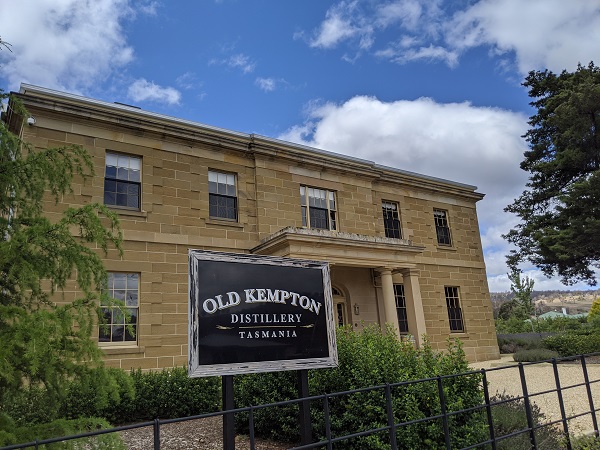
The next day we hired a car and drove out to Old Kempton, a renowned whiskey distillery north of Hobart. We arrived and walked through another beautiful old building and sat in the courtyard, as a musician strummed his guitar and sang. We ordered some food and wine, sat back and appreciated the company – there was a group that had 2 large white dogs that were on their best behaviour. We love seeing dogs on holidays because it reminds us of our dog at home, which always puts a smile on our faces.

Old Kempton
Old Kempton Distillery

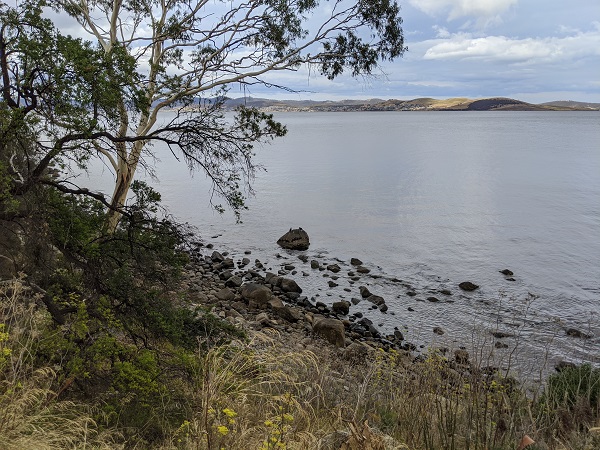
After the distillery, we went to Taroona Beach for a stroll. It was a beautiful day;  slightly overcast with a light breeze but the sun occasionally showed through the clouds. Being so close to Antarctica, it rarely gets too hot in Hobart, a piece of local wisdom I had picked up at the wedding. We made our way along the gravel track of the shoreline while looking out to sea. I was careful with my footing because I had for some silly reason decided to wear heels, but this gave me the chance to stop from time to time to imagine icy embankments in a nearby land across the ocean.

Taroona Beach
Taroona Beach

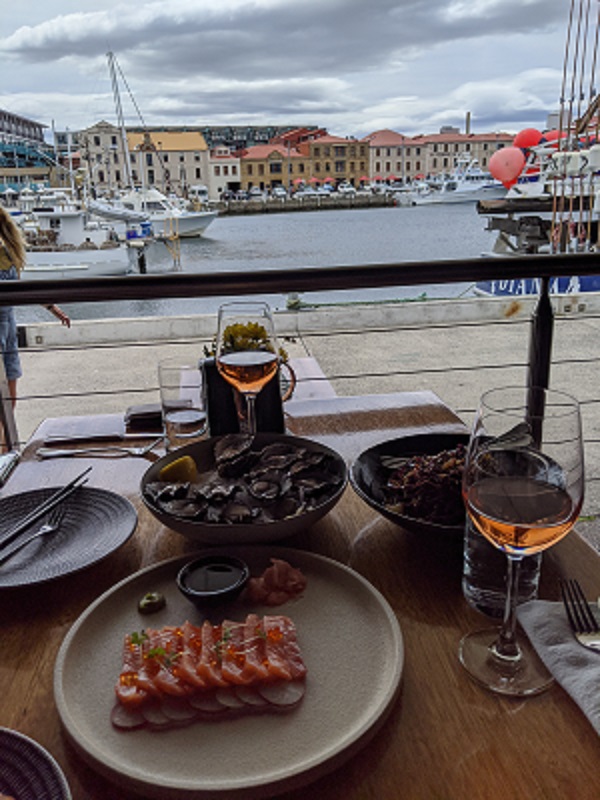
That evening, we walked along the harbour as we had done so many times over the past two days before enjoying seafood and wine, and admiring the artwork on display at Landscape Restaurant. The restaurant offered a dining experience inspired by the island of Tasmania, an it was a wonderful way to finish our trip.

For a place that takes less than an hour to get to by plane, we Melburnians should really visit more often. We are very lucky to have such diverse cities in Australia, and although it wasn’t my first time in Hobart, I enjoyed it as much as the last. If you haven’t been, I would highly recommend taking a trip when COVID-19 is behind us. If you have been, I have no qualms in encouraging you to back, as I am sure you will discover something new to love like I do every time.

Our bushfire crisis

A smokey city

The bushfires ravaging Australia are beyond catastrophic.

A significant portion of the country is on fire and the Australian community is rallying together to do what we can. Whether it’s donating food, money or helping out in the devastated regions, there are a lot of people out there striving to make a difference.

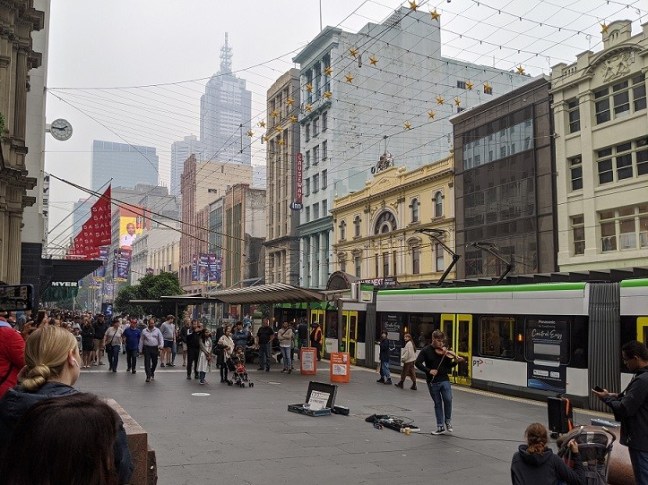
On Tuesday 6th January I went to work in Melbourne CBD and as soon as I stepped off the train, I was hit by the coat of smoke that covered the city. I walked through it on my way to work, and on my lunch break I watched a violinist play passionately, with an almost colourless backdrop. As the afternoon went on, I noticed the cloud of smoke gathering around my building, slowly closing us in.

The people

Firefighters and residents alike are experiencing the trauma first-hand. These people are in the front line, defending their land against notorious flames. Firefighters from all over have come together to save our soil.

After learning from the unfortunate events of Black Saturday back in 2009, residents seem to understand the severity of these fires and the likelihood of beating them. People are being told to evacuate, it is not safe to stay, and, in most cases, they are doing just that.

The animals

The loss of native Australian fauna is absolutely devastating. Our koala population has reduced to 5%, which leaves me lost for words. The animals have a very low chance of survival, and those that have been burned are likely to be euthanised. There are not enough resources to cope.

I saw a headline about the Mallacoota fires recently, that described the events of December 30, the sound the koalas made as they burned. It brought tears to my eyes as I thought of these beautiful creatures suffering.

The rest of Australia

If you can donate, please do – places like the Red Cross and the CFA need as much support as they can get. You can also donate directly to the World Wildlife Foundation – Australia, where proceeds will be put towards re-homing animals affected by the fires.

We can hope with all our might that the fires are over soon, but it is only just the start of summer.

Our “leaders” really need to face the facts and think about what they aren’t doing to save our country at the expense of our environment, our people and our livelihoods.

I read a powerful article yesterday that called out the need for Australia’s climate change policies to change urgently, labelling the Government’s position as a ‘destructive stance’. I couldn’t agree more.

The country is devastated. Coming back from this won’t be an easy feat. In a couple of days, the heat is expected to hit us again, and there is a high chance that some of the biggest fires will merge. There are leaders at state level doing as much as they can in providing support to communities who need it. But what is missing is a national strategy to work towards the prevention of events like this, instead of solutions for the damages that the lack of prevention has caused.